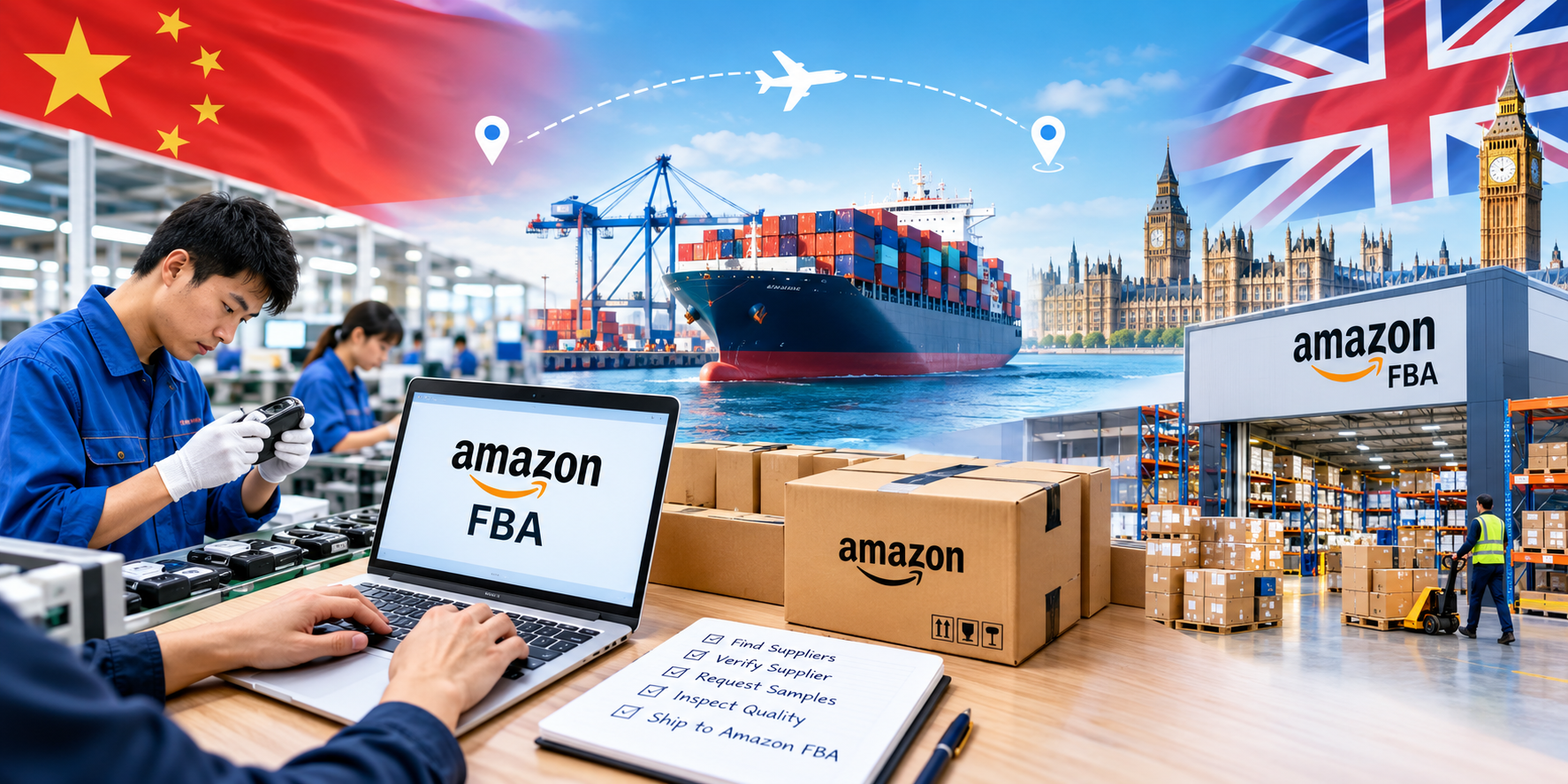
Sourcing products from China can give UK Amazon FBA sellers access to a large manufacturing base, competitive pricing and extensive product options. But finding a supplier is only one part of the process. The real challenge is choosing the right product, finding a reliable manufacturer, controlling quality and getting the goods to Amazon FBA without unexpected costs or delays.
For UK sellers, there are also important considerations around product compliance, import VAT, customs duty and Amazon’s own requirements.
This guide explains how to source products from China for Amazon FBA UK, from finding potential suppliers to inspecting your goods and preparing them for shipment.
1. Research the Product Before Finding a Supplier
Start with the product rather than the supplier.
Look for products with:
- Consistent customer demand
- Manageable competition
- Healthy potential profit margins
- Reasonable size and weight
- Low risk of damage during transport
- Straightforward manufacturing requirements
You should also check whether the product is subject to specific UK safety, labelling or compliance requirements. UK businesses importing consumer products are responsible for ensuring products meet relevant safety requirements before they are placed on the market.
Don’t calculate profitability using the factory price alone. Your actual cost can include manufacturing, packaging, inspection, freight, customs duty, import VAT and Amazon-related fulfilment costs.
2. Find Chinese Manufacturers and Suppliers
Once you have a product in mind, identify several potential suppliers rather than choosing the first one you find.
You can search through:
- B2B sourcing platforms
- Manufacturer directories
- Trade shows
- Industry referrals
- Professional sourcing companies
When comparing suppliers, look beyond the advertised unit price. Ask about MOQ, production capacity, lead times, materials, packaging, customisation and payment terms.
A supplier offering the cheapest quote may not necessarily provide the lowest overall cost if quality problems, delays or rejected goods occur later.
3. Verify the Supplier Before Ordering
Supplier verification is one of the most important stages when sourcing from China.
Before placing a significant order, check whether the supplier is a genuine manufacturer or trading company and whether its capabilities match your requirements.
You should consider checking:
- Business registration
- Factory location
- Manufacturing capabilities
- Product experience
- Certifications where applicable
- Export experience
- Production capacity
- Communication and responsiveness
For larger orders, a Factory Audit can provide a more detailed assessment of the supplier’s facilities, production processes and quality systems.
This extra due diligence can help reduce the risk of working with an unsuitable supplier.
4. Request Samples Before Placing a Bulk Order
Never rely only on photographs or product descriptions.
Request samples and compare them against your requirements. Check the materials, dimensions, finish, functionality, packaging and overall quality.
If you plan to sell under your own brand, also check:
- Logo placement
- Packaging design
- Labels
- Instructions
- Product colours
- Accessories
A sample gives you an opportunity to identify problems before committing to a large production run.
5. Compare Quotes Carefully
When you receive quotations from Chinese suppliers, don’t automatically select the lowest price.
Create a simple comparison covering:
| Factor | What to Compare |
| Unit price | Cost per product |
| MOQ | Minimum order quantity |
| Materials | Specification and quality |
| Packaging | Standard or customised |
| Lead time | Production timeframe |
| Payment terms | Deposit and balance |
| Shipping terms | Relevant Incoterm |
| Quality control | Inspection arrangements |
This gives you a clearer picture of the true sourcing cost rather than simply comparing factory prices.
6. Confirm Product Specifications
Before production starts, make sure the supplier has a clear and agreed specification.
Your purchase requirements should cover relevant details such as:
- Product dimensions
- Materials
- Colours
- Weight
- Tolerances
- Packaging
- Labelling
- Branding
- Quantity
- Quality standards
Clear specifications reduce misunderstandings and give an inspection team something objective to check against later.
7. Monitor Production and Inspect Your Products
A sample may look excellent while a bulk production run can still contain defects. This is why quality control should continue after the order is placed.
Professional Inspection Services can be used at different stages of production.
During Production Inspection – A During Production Inspection checks products while manufacturing is underway. This can help identify recurring problems early enough for the supplier to make corrections.
Pre-Shipment Inspection – A Pre-Shipment Inspection takes place when production is substantially complete. It can check product quality, quantity, specifications, packaging and other agreed requirements before the goods leave the factory.
Container Loading Supervision – For larger shipments, Container Loading Supervision helps verify that the correct goods and quantities are loaded properly before the container is dispatched.
Using the appropriate inspection at the right stage can help reduce the risk of discovering expensive problems only after the goods reach the UK.
8. Calculate the Landed Cost
Your Amazon FBA profit calculation should be based on landed cost, not simply the supplier’s unit price.
Consider:
Product cost + packaging + inspection + freight + customs duty + import VAT + other applicable costs = overall landed cost
The exact customs and tax treatment depends on the goods and circumstances. UK importers need the correct commodity code because it determines the applicable customs duty and import VAT treatment.
Businesses importing goods also need an EORI number for UK imports.
Don’t estimate these costs too early using assumptions. Check the current requirements for your specific product before placing a large order.
9. Ship Your Products to Amazon FBA
Once production and inspections are complete, arrange transportation to the appropriate Amazon fulfilment centre or another agreed UK destination before entering the FBA process.
Amazon’s current UK guidance requires sellers to prepare products according to its packaging and preparation requirements and use the Send to Amazon workflow when sending inventory to fulfilment centres.
Your shipping plan may involve:
- Sea freight for larger shipments
- Air freight for faster delivery
- Freight forwarders
- Customs clearance
- Delivery to an Amazon fulfilment centre
Make sure your shipping and customs arrangements are agreed before the goods leave the factory.
Common Mistakes When Sourcing from China for Amazon FBA
UK Amazon sellers often make avoidable mistakes when they focus too heavily on the supplier’s initial price.
Common problems include:
- Choosing a supplier without verification
- Ordering large quantities before testing samples
- Skipping product inspections
- Not confirming specifications in writing
- Underestimating freight and import costs
- Ignoring UK product compliance
- Failing to calculate the complete landed cost
A structured sourcing process helps identify these risks before they become expensive problems.
How Avartek Sourcing Can Help
Sourcing from China involves much more than finding a factory. Avartek Sourcing helps businesses manage key stages of the sourcing process, from identifying suppliers to quality control.
Our services include Product Sourcing, Supplier Verification, Factory Audit and Inspection Services, including During Production Inspection, Pre-Shipment Inspection and Container Loading Supervision.
For UK Amazon sellers, this support can provide greater visibility over suppliers, production and product quality before goods are shipped.
Conclusion
Learning how to source products from China for Amazon FBA UK is about building a reliable process rather than simply finding the cheapest manufacturer.
Research the product carefully, compare several suppliers, verify their capabilities, test samples, confirm specifications and monitor production. Don’t forget to calculate your complete landed cost and check the UK requirements that apply to your products.
With proper supplier due diligence and quality control, UK Amazon sellers can reduce sourcing risks and build a more dependable supply chain.
FAQ
1. How do I source products from China for Amazon FBA UK?
Start by researching a suitable product, finding several Chinese suppliers, verifying their credentials, requesting samples, negotiating terms and confirming specifications. Quality inspections and careful shipping planning should follow before sending inventory to Amazon FBA.
2. How do I find reliable Chinese suppliers for Amazon FBA?
You can find suppliers through B2B platforms, manufacturer directories, trade shows and sourcing companies. Before placing a large order, verify the supplier’s business details, manufacturing capabilities, experience and quality processes.
3. Should I inspect products before shipping them to Amazon FBA?
Yes. Product inspections can help identify quality, quantity, packaging or specification problems before goods leave the factory. Depending on the order, businesses may use During Production Inspection, Pre-Shipment Inspection or Container Loading Supervision.
4. What costs should I consider when sourcing from China for Amazon FBA UK?
Consider product costs, packaging, samples, inspection, freight, customs duty, import VAT and other applicable logistics or fulfilment costs. The correct commodity code should be checked because it helps determine the applicable customs duty and import VAT treatment.
5. Can Avartek Sourcing help Amazon sellers source products from China?
Yes. Avartek Sourcing can support businesses with product sourcing, supplier verification, factory audits and product inspection services throughout the sourcing process.