Procurement Services Company: The 2026 Guide to End-to-End China Procurement for UK Businesses
In 2026, procurement is not just “buying cheaper.” It is a disciplined system for securing supply, controlling quality and protecting cashflow. For UK businesses importing from China, working with a procurement services company can be the difference between predictable growth and recurring supplier chaos.
This guide explains what procurement services include, how end-to-end procurement works, and how it connects with our March sourcing topics: Blog 1, Blog 2, Blog 3, Blog 4, Blog 5, Blog 6, and Blog 7.
What does a procurement services company do?
A procurement services company helps businesses source products, manage suppliers, negotiate terms, oversee production and ensure quality and delivery targets are met. In a China import context, procurement services typically cover:
- Supplier identification and vetting (capability + risk checks)
- Commercial negotiation (pricing, MOQs, lead times, terms)
- Sampling and specification control
- Production milestones and issue resolution
- Quality control inspections (see Blog 6)
- Shipping coordination and documentation alignment
Why procurement matters more in 2026
Modern procurement is about resilience. UK importers face pressure from lead-time volatility, compliance expectations and customer standards that punish defects quickly. Procurement systems reduce risk through repeatable processes, not hope.
If you are new to this, begin with Blog 2 for the complete process breakdown.
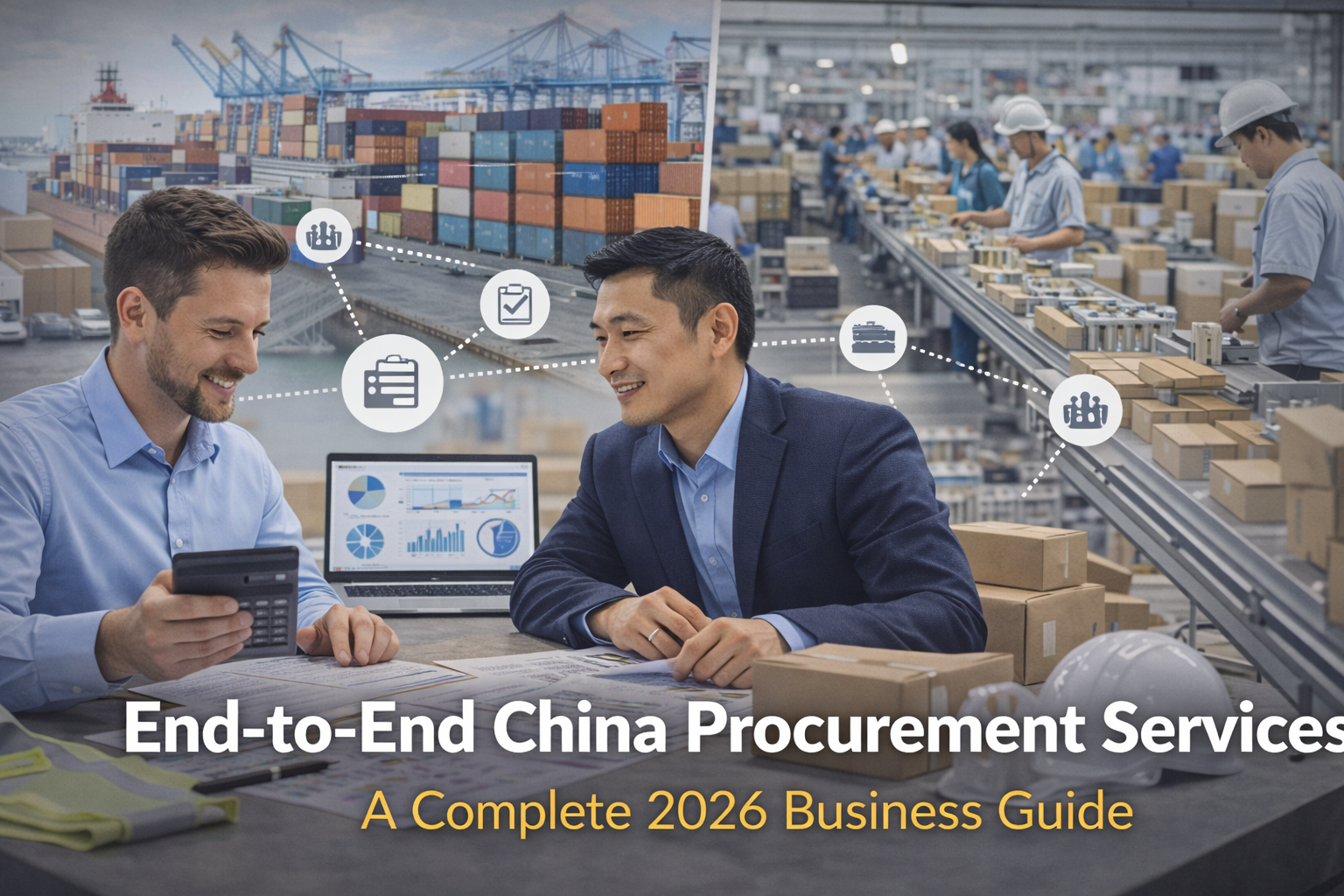
The end-to-end procurement workflow (China → UK)
- Requirement definition: specs, packaging, compliance, cost targets
- Supplier discovery: shortlist factories that can truly deliver
- Verification: documentation checks + operational screening
- Sampling: staged samples + specification lock
- Negotiation: price, MOQs, lead times, payment terms
- Production oversight: milestones and corrective actions
- Quality inspections: prevent defects before shipment
- Shipping and documents: align paperwork to prevent delays
This workflow complements the role of a china sourcing agent and is the foundation for scaling brands (see Blog 5).
Procurement vs sourcing: what’s the difference?
Sourcing often refers to finding suppliers and negotiating initial deals. Procurement is broader—covering supplier management, repeat orders, performance control, and continuous improvement.
If you are deciding between supplier models, read Blog 3. If you are evaluating DIY sourcing, read Blog 7.
How procurement services reduce total landed cost
Unit price is only one part of cost. Procurement reduces total landed cost by lowering defect rates, preventing delays, improving payment terms, and avoiding rework or emergency freight.
- Fewer defects: less returns and write-offs (see Blog 6)
- More stable lead times: fewer missed launches
- Better terms: improved cashflow predictability
- Supplier performance: continuous improvement over repeat orders
How Avartek Sourcing supports procurement for UK businesses
Avartek Sourcing supports end-to-end procurement: supplier discovery and verification, sampling and specification control, production tracking, and inspections—helping you reduce risk and scale with confidence.
Next step: If you want procurement support for your next order cycle, contact Avartek via /contact/.