Introduction
Choosing the right supplier is one of the most important decisions when sourcing products overseas. A competitive quote or a professional-looking website doesn’t always guarantee a reliable business. Without proper due diligence, companies can face poor product quality, delayed shipments, compliance issues, or even supplier fraud.
Two common methods of reducing these risks are supplier verification and a factory audit. Although they are often confused, they serve different purposes. Knowing when to use each can save your business time, money, and unnecessary headaches.
If you’re investing in Product Sourcing Services, understanding the difference between supplier verification and factory audits will help you make better sourcing decisions.
What Is Supplier Verification?
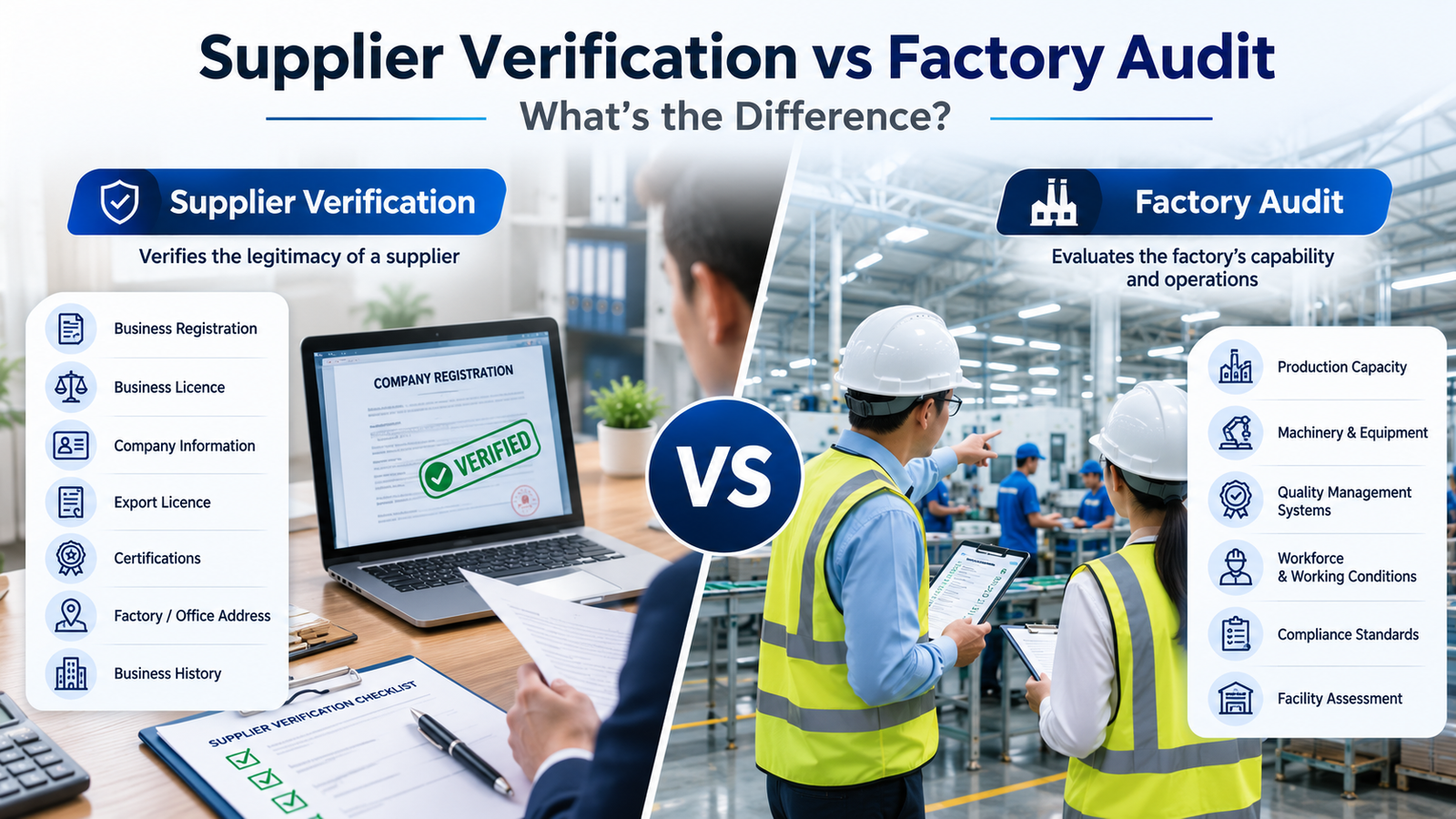
- Supplier verification is the process of confirming that a supplier is a genuine, legally registered business before placing an order.
- It focuses on verifying the supplier’s identity, business credentials, and legitimacy rather than inspecting the manufacturing process.
- Many businesses use Supplier Verification Services before paying a deposit to reduce the risk of dealing with unreliable or fraudulent suppliers.
Supplier verification typically includes:
- Business registration checks
- Company ownership verification
- Factory or office address confirmation
- Export licences
- Product certifications
- Business history
- Contact information validation
When should you use supplier verification?
Supplier verification is ideal when:
- Working with a new supplier
- Finding suppliers through Alibaba or online marketplaces
- Comparing multiple suppliers
- Placing your first order
- Reducing sourcing risks before payment
What Is a Factory Audit?
A factory audit is often the first stage of a broader quality assurance process. Many importers also schedule During Production Inspection, Pre-Shipment Inspection, and Container Loading Supervision to monitor product quality, identify issues early, and ensure goods are packed and loaded correctly before shipping.
A factory audit usually covers:
- Manufacturing capability
- Production capacity
- Machinery and equipment
- Quality management systems
- Workforce and skills
- Production processes
- Health and safety practices
- Compliance standards
- Warehouse and storage conditions
When is a factory audit recommended?
A factory audit is best when:
- Placing high-value orders
- Starting long-term manufacturing partnerships
- Producing custom products
- Working in regulated industries
- Quality consistency is critical
Supplier Verification vs Factory Audit
| Feature | Supplier Verification | Factory Audit |
| Purpose | Verify business legitimacy | Assess manufacturing capability |
| Business registration | ✔ | ✔ |
| Site inspection | Limited | Comprehensive |
| Production assessment | Basic | Detailed |
| Machinery review | ✖ | ✔ |
| Quality systems | Basic | Comprehensive |
| Best for | First-time suppliers | Large production orders |
The Key Difference
Supplier verification answers:
“Is this supplier a legitimate business?”
Factory audit answers:
“Can this factory reliably manufacture my products?”
Both reduce sourcing risks, but they focus on different stages of supplier evaluation.
Which One Should You Choose?
Choose supplier verification if you want to confirm that a supplier is genuine before making payments or placing an initial order.
Choose a factory audit if you’re investing in large production runs or need confidence that the manufacturer can consistently meet your quality expectations.
If you’re unfamiliar with overseas manufacturing, working with an experienced China Buying Agent can simplify supplier selection and help determine which assessment is most appropriate.
Should You Use Both?
In many cases, yes.
Supplier verification helps eliminate unreliable suppliers early in the process, while a factory audit provides deeper insight into production capability.
Using both services can help you:
- Reduce sourcing risks
- Improve product quality
- Avoid costly supplier mistakes
- Build long-term supplier relationships
- Increase confidence before production begins
For businesses making significant investments, combining both assessments is often the safest approach.
Common Mistakes Businesses Make
Many sourcing problems occur because buyers skip essential checks.
Avoid these common mistakes:
- Trusting online profiles without verification
- Choosing suppliers based only on price
- Skipping due diligence
- Ignoring factory capabilities
- Not checking certifications
- Failing to inspect products before shipment
Taking the time to verify suppliers can prevent expensive problems later.
How Avartek Sourcing Can Help
Choosing a reliable supplier is only the first step in protecting your supply chain. Once production begins, regular inspections are equally important to ensure your products meet the required quality standards before they leave the factory.
At Avartek Sourcing, we help businesses reduce sourcing risks through comprehensive supplier due diligence and inspection support. Alongside our Supplier Verification Services and Product Sourcing Services, we also offer a range of Inspection Services to help monitor product quality at every stage of production.
Our inspection solutions include:
- Factory Audit – Assess a manufacturer’s facilities, production capabilities, and quality management systems before placing an order.
- During Production Inspection (DPI) – Identify quality issues while production is in progress, allowing corrective action before the order is completed.
- Pre-Shipment Inspection (PSI) – Verify product quality, quantity, packaging, and specifications before goods are shipped.
- Container Loading Supervision (CLS) – Ensure products are loaded correctly, quantities are accurate, and goods are handled safely before dispatch.
Using these services together provides greater confidence that your products meet your expectations and helps minimise costly delays, defects, or disputes.
Frequently Asked Questions
Is supplier verification enough?
Supplier verification is an excellent first step, but for large or long-term orders, a factory audit provides additional confidence.
How long does a factory audit take?
Most factory audits are completed within one working day, depending on the size of the facility.
Can small businesses benefit from supplier verification?
Yes. Even small orders carry financial risks, making supplier verification a worthwhile investment.
Is a factory audit the same as a quality inspection?
No. A factory audit evaluates the manufacturer’s capability, while quality inspections assess products during or after production.
Can I use both services together?
Absolutely. Many experienced importers use supplier verification first, followed by a factory audit before placing larger orders.
Conclusion
Supplier verification and factory audits both play an important role in reducing sourcing risks, but they serve different purposes.
Supplier verification confirms that you’re working with a legitimate business, while a factory audit evaluates whether the manufacturer can consistently produce quality products. To further reduce sourcing risks, many businesses also use inspection services throughout production and before shipment. By combining supplier verification, factory audits, and professional inspection services, businesses can improve product quality, reduce costly mistakes, and build a more reliable supply chain. Avartek Sourcing provides end-to-end support to help businesses source with confidence.