
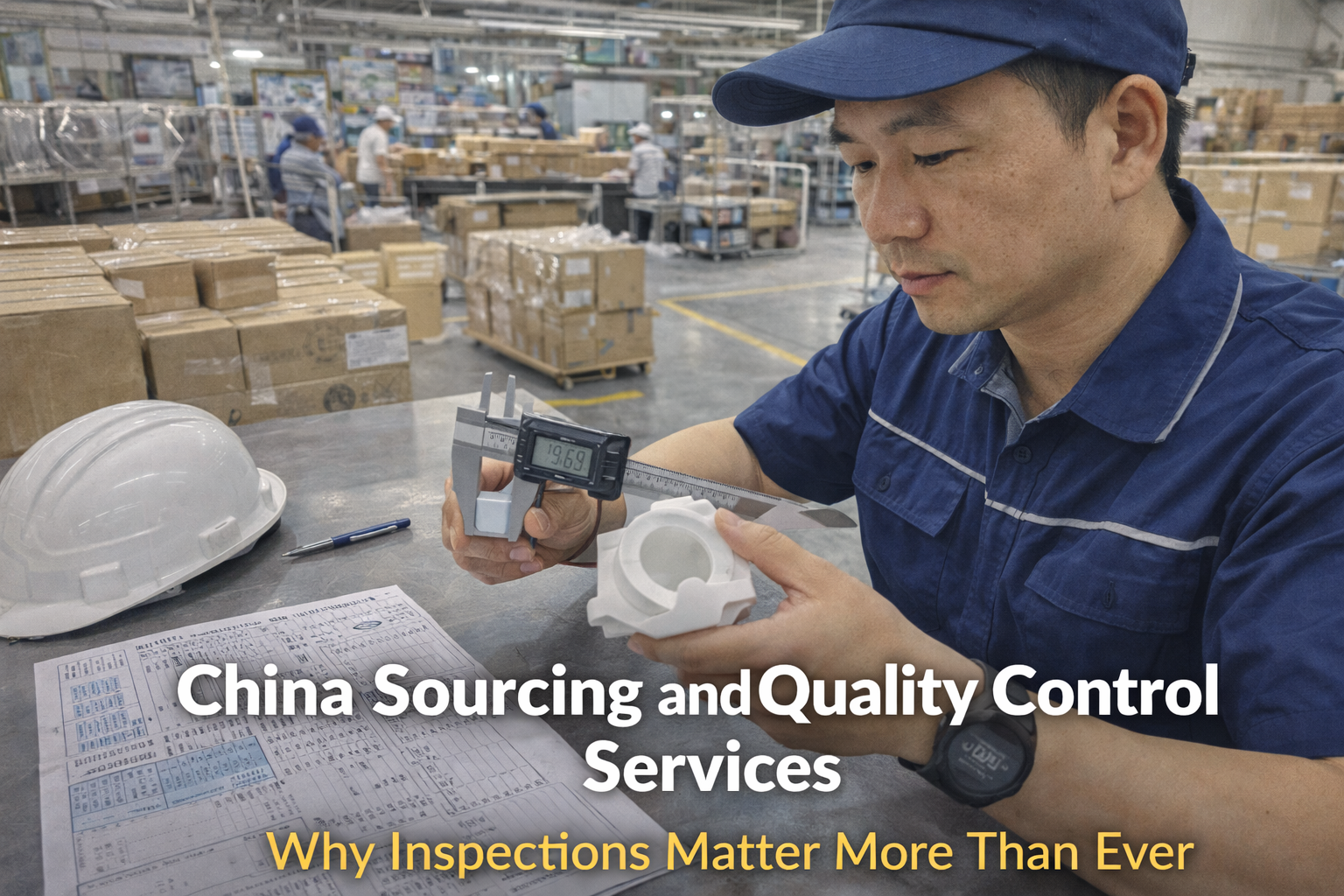
China Sourcing and Quality Control Services: Why Inspections Matter More Than Ever in 2026
If you import from China, quality control is not a “nice-to-have.” It is a financial control that protects your stock, cashflow and customer trust. In 2026, with tighter expectations and faster product cycles, china sourcing and quality control services are one of the highest-ROI investments a UK importer can make.
This article interlinks with Blog 1 (agents), Blog 2 (process), and Blog 4 (risk).
Why quality failures are so expensive
Defects don’t just create refunds. They create warehouse handling costs, delayed launches, ad spend waste, negative reviews, and long-term brand damage. The earlier you catch problems, the cheaper they are to fix.
Key inspection types (and when to use them)
1) Pre-production inspection
Checks raw materials and readiness before production begins—ideal for new suppliers or new products.
2) During production inspection
Finds defects mid-run, when corrections still prevent large-scale waste.
3) Pre-shipment inspection
Occurs when goods are finished and packed. This is often the most important checkpoint before final payment and shipping.
4) Container loading supervision (optional)
Confirms correct cartons, quantities and loading method—useful for higher-value shipments.
What “good QC” actually checks
- Measurements and tolerances
- Visual defects and finish standards
- Function testing (where relevant)
- Packaging integrity and labelling
- Carton quantity checks and assortment accuracy
QC works best inside a structured sourcing process
Inspections are most effective when built into milestones: specs locked, samples approved, and production monitored. That’s why QC should be part of the supplier sourcing process, not an afterthought.
How Avartek Sourcing supports quality control
Avartek Sourcing helps importers build QC into supplier management—so defects are prevented early and caught before shipment. If you’re importing for the first time, read Blog 4; if you’re choosing a sourcing model, read Blog 3.
Next step: request inspection-supported sourcing via /contact/.